




 12 май 2023
 12
12INFLUENCE OF US NEOCONSERVATISM ON FORMATION OF NATIONAL SECURITY PARADIGM

645e18fb6dfaf.pdf
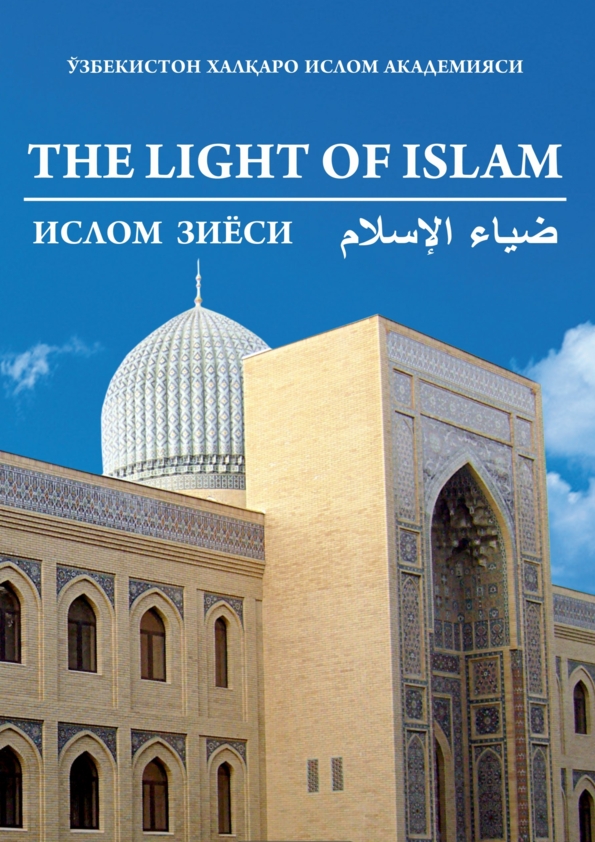

MAQOLA ANNOTATSIYASI

MUALIFLAR

T.Mukhammadsidiqov
O'zbekiston xalqaro islom akademiyasi, Jizzakh State Pedagogical Institute,
Teglar
Maqolani baholang
0
Maqola idintifikatorlari
DOI:
Mavjud emas
Foydalanilgan adabiyotlar
1. Daalder I., Lindsay J. (2005). America Unbound. - Washington, P.50-58. 2. Kagan R. (2008). The Return of History and the End of Dreams. - New York: Alfred A Knopf,P.3.64. 3. Kagan R. Why America Must Lead. www.bushcenter. org/catalyst/ leadership/why-america-must-lead 4. Kagan R., Kristol W. (2000). Present Dangers: Crisis and Opportunity in America’s Foreign and Defense Policy. - San Francisco: Encounter Books, Kindle Edition,P.291. 5. Kalicki J.H., Goldwyn D.L. (2005). Energy and Security: Toward a New Foreign Policy Strategy. Washington - Baltimore, P.9. 6. Kirkpatrick J. (1983). The Reagan Phenomenon and Other Speeches on Foreign Policy. - Washington D.C.:American Enterprise Institute, P.3-16. 7. Kristol W. Memorandum to: Opinion Leaders. Subject: Comprehensive Test Ban Treaty. http://www. newamericancentury.org/defoct2799.htm 8. Morgenatau H. (1962). The Impasse of American Foreign Policy, Chicago: University of Chicago Press, P.191. 9. Muhammadsidiqov, M. (2018). The influence of “religious factor” on ethno-political and confessional conflicts in Muslim countries. The Light of Islam. Vol. 2018: Iss. 1. Available at: https://uzjournals.edu.uz/iiau/ vol2018/iss1/18 10. Rodionovsky M. (2008). Influence of A.Wohlstetter , on the development by the neoconservatives of the US foreign policy and national security strategy. Bulletin of the Chit State University,6 (51), 177. 11. Samarov R. (2010). Methodological bases of security. Tashkent. Academy,P.17. 12. Schmidt B., Williams M. (2008). The Bush Doctrine and the Iraq War: Neocoservatives Versus Realists. Security Studies, 17(2),196. 13. Schmitt G., Memorandum to: Opinion Leaders, Subject: NATO enlargement. What is the “Threat?”. http://www. newamericancentury.org/nato-19971013.htm 14. Turaev Abrar Salokhiddinovich, Abdusamadov Farrukh. (2020). The Impact of Changes in Public Administration on the Development of Neoconservative Ideas in the United States. International Journal of Advanced Science and Technology, 29(3), 8113. Retrieved from http://sersc.org/journals/index.php/IJAST/article/ view/8387 15. Turaev, A. (2019). Islamic factor in neoconservative foreign policy of the USA in the Middle East. Theoretical & Applied Science, (2), 175-178. 16. Vaisse J. (2010). Neoconservatism: The History of the Movement. - Harvard: Harvard University Press, P, 236. 17. Azimov H.Y. (2019). The emergence of the Syrian crisis and the impact of the external forces on it. Bulletin Social-Economic and Humanitarian Research. № 4 (6). Pp. 92-97. 18. Veselovsky S.S.(2009). Multilateral cooperation in the fight against transnational terrorism.M.,P.122. 19. Muhammadsidiqov, M. (2016). The Evolution of Islamic Politicization Process. International Journal of Multidisciplinary and Current Research. Vol.4 (Nov/ Dec 2016). Available at: pdfs.semanticscholar.org/ c85f /0282346d200850b1d9ceb8bf95b2bfdde7de.pdf 20. Muhammadsidikov, M. (2015). Özbekistan’da toplumsal yaşamin ana özelliği hoşgörü. Atatürk Üniversitesi Sosyal Bilimler Dergisi, 0 (54), 7-14. Available at: https://dergipark.org.tr/en/pub/ataunisosbd/issue/2811/ 37766 21. Muhammadsidiqov, M. (2015). Stability of North African Region. International Journal of Multidisciplinary and Current Research. Vol.3 (March-April-2015). Available at: http://ijmcr.com/stability-of-north-african-region/ 22. Muhammadsidiqov, M. (2019). Problems of regulation of secularism and religious principles in Arab countries. Bulletin Social-Economic and Humanitarian Research. No. 4(6). Available at: https://cyberleninka.ru/ article/n/ problems-of-regulation-of-secularism-and-religiousprinciples-in-arab-countries 23. Pulatkhodjaev Z.S. (2019). Modern initiatives of Uzbekistan to strengthen integration in Central Asia. Theoretical and Applied Science. Philadelphia, USA. No. 06 (74). P. 516-518. 24. Saydaliyeva N., Nazirov M. (2018). Features of the state youth policy in Uzbekistan. Paradigmata poznani. Paradigms of knowledge, (Czech Republic). No. 06 (74). P. 117-120. 25. Idirov U.Yu. (2019). Development of modern innovative bases of democracy as a leading factor of enhancing the possibility of sovereign political development. European Science Review, Vienna. No. 7-8. Р. 41-46. 26. Nazirov M.M. (2014). The Conceptual Basis of Contemporary Political Processes in Uzbekistan. Contemporary Central Asia. India, New Delhi. Vol. XVIII, No.2&3. P. 32-46.