




 3 Dekabr 2019
 41
41PILOT STUDY OF GADOLINIUM ACCUMULATION IN GLIAL TUMORS OF HUMAN BRAIN

5de6122bb30ae.pdf
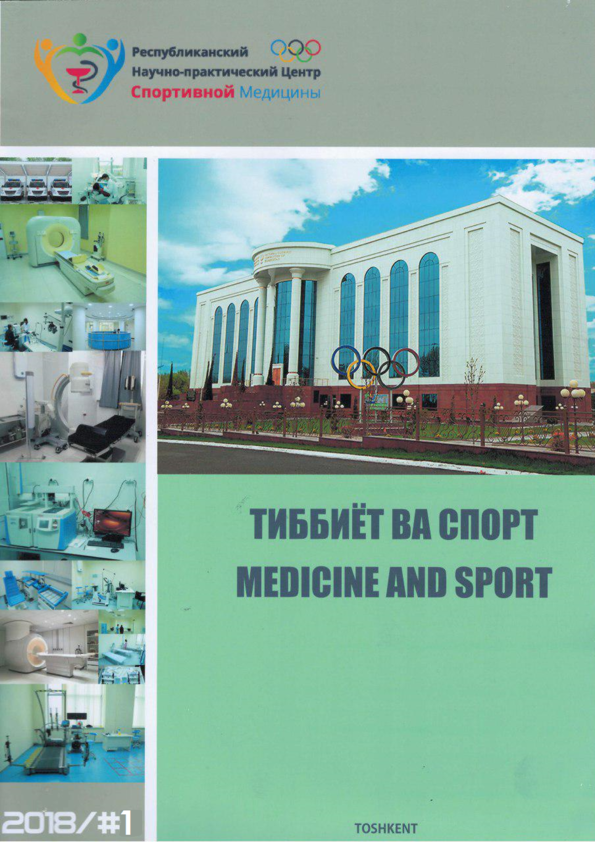

MAQOLA ANNOTATSIYASI

MUALLIFLAR

I.Mavlyanov
RSTIAM
G.Kulabdullaev
RSTIAM
A.Kim
RSTIAM
G.Djurayeva
RSTIAM
S.Saitdjanov
RSTIAM
I.Sadikov
RSTIAM
B.Yarmatov
RSTIAM
A.Salimov
RSTIAM
R.Kadyrbekov
RSTIAM
D.Alimov
RSTIAM
N.Kadyrbekov
RSTIAM
Teglar
SHU JURNALDAGI BOSHQA MAQOLALAR
- МАТЕМАТИЧЕСКОЕ МОДЕЛИРОВАНИЕ В СПОРТЕ - ИННОВАЦИОННЫЙ ПОДХОД К ОТБОРУ СПОРТСМЕНОВ И ПРОГНОЗУ СПОРТИВНОЙ УСПЕШНОСТИ
Tibbiyot va sport · 3 Yanvar 2020
- СПОРТЧИ-ФУТБОЛЧИЛАР МОРФОФЕНОТИПИ ВА УНИНГ СПОРТЧИ АМПЛУАСИГА БОҒЛИҚЛИГИ
Tibbiyot va sport · 4 Dekabr 2019
- ЎЗБЕКИСТОНДА ОММАВИЙ СПОРТ-СОҒЛОМЛАШТИРИШ ИШЛАРИНИ ТИЗИМЛИ БОШҚАРУВ АСОСЛАРИ
Tibbiyot va sport · 4 Dekabr 2019
- НАФАС ОЛИШ ФУНКЦИЯЛАРИНИНГ КЎРСАТКИЧЛАРИ ВА СПОРТЧИНИНГ МОРФОЛОГИК ФЕНОТИПНИНГ АЙРИМ КЎРСАТКИЧЛАРИ БИЛАН БОҒЛИҚЛИГИ
Tibbiyot va sport · 4 Dekabr 2019
- ЖИСМОНИЙ ЮКЛАМАЛАРНИНГ СПОРТЧИЛАР ГЕМОСТАЗ ТИЗИМИГА ТАЪСИРИНИНГ ГЕНЕТИК СКРИНИНГИ
Tibbiyot va sport · 4 Dekabr 2019
- ЕЛКА БЎҒИМИНИ ШИКАСТЛАНИШИДА РЕАБИЛИТАЦИЯ
Tibbiyot va sport · 4 Dekabr 2019
Maqolani baholang
Maqola idintifikatorlari
DOI:
Mavjud emas
Foydalanilgan adabiyotlar
8. Hao D., Ai T., Goerner F. et al. MRI contrast agents: basic chemistry and safety // J. Magn. Reson. Imag. – 2012. – Vol. 36, №5. – P. 1060-1071
9. High W.A., Ayers R.A., Chandler J. et al. Gadolinium is detectable within the tissue of patients with nephrogenic systemic fibrosis // J. Amer. Acad. Dermatol. – 2007. – Vol. 56, №1. – P. 21-26.
1. American College of Radiology Committee on Drugs and Contrast Media. ACR manual on contrast media. – 9th ed. – Reston (Va): American College of Radiology, 2013.
2. Amet S., Launay-Vacher V., Clement O. et al. Incidence of nephrogenic systemic fibrosis in patients undergoing dialysis after contrast-enhanced magnetic resonance imaging with gadoliniumbased contrast agents: the Prospective Fibrose Nephrogenique Systemique study // Invest Radiol. – 2014. – Vol. 49, №2. – P. 109-115.
3. Caravan P., Ellison J.J., McMurry T.J., Lauffer R.B. Gadolinium (III) chelates as MRI contrast agents: structure, dynamics, and applications // Chem. Rev. – 1999. – Vol. 99, №9. – P. 2293-2352.
4. Edelman R.R., Warach S. Magnetic resonance imaging (1) // New Engl. J. Med. – 1993. – Vol. 328, №10. – P. 708-716.
5. Edelman R.R., Warach S. Magnetic resonance imaging (2) // New Engl. J. Med. – 1993. – Vol. 328, №11. – P. 785-791.
6. Errante Y., Cirimele V., Mallio C.A. et al. Progressive increase of T1 signal intensity of the dentate nucleus on unenhanced magnetic resonance images is associated with cumulative doses of intravenously administered gadodiamide in patients with normal renal function, suggesting dechelation // Invest. Radiol. – 2014. – Vol. 49, №10. – P. 685-690.
7. Grobner T. Gadolinium – a specific trigger for the development of nephrogenic fibrosing dermopathy and nephrogenic systemic fibrosis? // Nephrol. Dial. Transpl. – 2006. – Vol. 21, №4. – P. 1104-1108.
10. Kanda T., Ishii K., Kawaguchi H. et al. High signal intensity in the dentate nucleus and globus pallidus on unenhanced T1-weighted MR images: relationship with increasing cumulative dose of a gadoliniumbased contrast material // Radiology. – 2014. – Vol. 270, №3. – P. 834-841.
11. McDonald R.J., McDonald J.S., Kallmes D.F. et al. Intracranial gadolinium deposition after contrast-enhanced MR imaging // Radiology. – 2015. Vol. 000. – P. 1-11
12. Mednis I.V. Gamma-radiation of radionuclides, used in neutron activation analysis // Reference book. – Riga: Zinatne, 1987.
13. Moreau J.F., Droz D., Sabto J. et al. Osmotic nephrosis induced by water-soluble triiodin- ated contrast media in man: a retrospective study of 47 cases // Radiology. – 1975. – Vol. 115, №2. – P. 329-336.
14. SPC Magnevist. Summary of Product Characteristics last updated on medicines. – Bayer Limited. 2010.
15. White G.W., Gibby W.A., Tweedle M.F. Comparison of Gd(DTPABMA) (Omniscan) Versus Gd(HP-DO3A) (ProHance) Relative to Gadolinium Retention in Human Bone Tissue by Inductively Coupled Plasma Mass Spectroscopy // Invest. Radiol. – 2006. – Vol. 41, №3. – P. 272-278
16. Zhou Z., Lu Z.R. Gadolinium-based contrast agents for magnetic resonance cancer imaging // Wil. Interdis. Rev. Nanomed Nanobiotech. – 2013. – Vol. 5, №1. – P. 1-18.