




 24 Fevral 2026
 25
25Methodological Approaches of Muslim Scholars to the Study of Religions

9_e8b72137.pdf
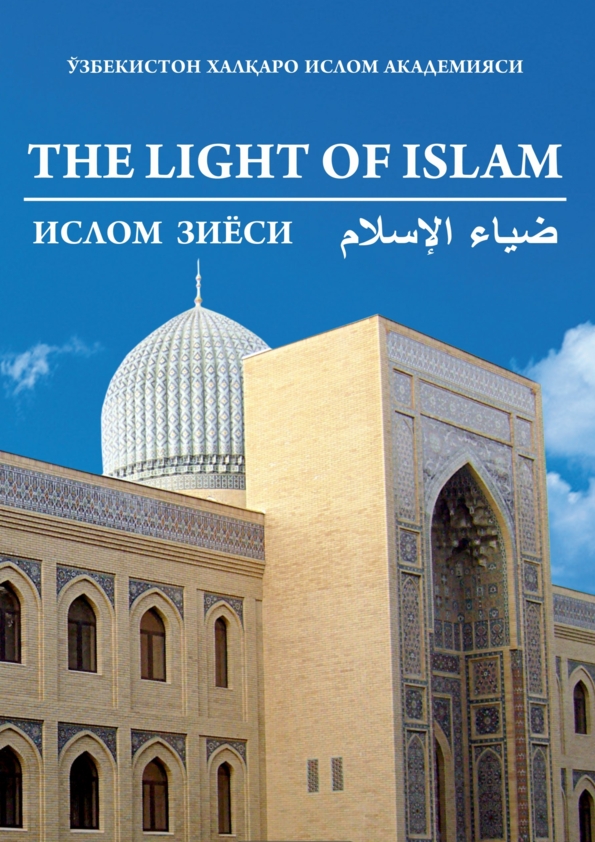

ARTICLE ANNOTATION

AUTHORS

M.Ibrohimova
"O`ZBEKISTON XALQARO ISLOM AKADEMIYASI" DAVLAT MUASSASASI
Tags
SIMILAR ARTICLES
- The content of the work «Rawzat us-salikin» and its codicological characteristics
Islamic thought · 11 Sentabr 2026
- The Historical Development of Mosques and Madrasahs in Tashkent
Islamic thought · 11 Sentabr 2026
- Reflection of national and religious values in “Kitab al-Qand” by Abu Hafs Nasafi
Islamic thought · 11 Sentabr 2026
- The Distribution of the Manuscript Works of al-Maturidi and the Scholars of the Maturidi School in Global Manuscript Collections (based on the examples of Abu al-Mu’in al-Nasafi and Sa‘d al-Din al-Taftazani)
Islamic thought · 11 Sentabr 2026
- Jalaliddin Muhammad Qaini and his work “Nasayikh-i Shahrukhi”
Islamic thought · 11 Sentabr 2026
- The role of madrasas in the educational system of Bukhara
Islamic thought · 11 Sentabr 2026
OTHER ARTICLES IN THIS JOURNAL
- Books dedicated to Hadith narrators
THE LIGHT OF ISLAM · 11 Iyun 2026
- Ibn Sina's exotericism in metaphysics and the interpretation of the world
THE LIGHT OF ISLAM · 8 May 2026
- The formation and development of scholarly traditions of Islamic law in Mawarannahr
THE LIGHT OF ISLAM · 8 May 2026
- The legal status of khabar al-wahid in schools of Islamic jurisprudence
THE LIGHT OF ISLAM · 8 May 2026
- Characteristics of social integration of Muslim communities in religious minority conditions
THE LIGHT OF ISLAM · 8 May 2026
- Abu’l-Ma’ali Muhammad ibn Ubaydullah’s “Bayan al-Adyan”: A Source Analysis in Eastern Comparative Religion
THE LIGHT OF ISLAM · 8 May 2026
Rate Article
Article Identifiers
References
Abduhalimov B. (2002). Abu Rayhon Beruniy / Buyuk allomalarimiz. – Toshkent: Toshkent Islom universiteti.
Abu Rayhon Beruniy. (1995). Hindiston. Tarjima: A. B. Xalidov, Yu. N. Zavadovskiy. // Tanlangan asarlari, Tom II. Toshkent: Fan, 1963. Qayta nashr: M.: Ladomir.
Adam Mez. (1997). Musulmon renessansi. – Toshkent: Fan.
Mukhamedov, N., & Turambetov, N. METHODOLOGIES EMPLOYED BY AL BERUNI IN THE ANALYSIS OF RELIGIOUS SYSTEMS // Asian Journal of Multidimensional Research ISSN: 2278-4853 Vol. 12, Issue 12, December 2023 SJIF 2022 = 8.179 -P.105-110.
Shalabiy, Ahmad. (1960). Muqaranat al-adyon. – Qohira: Maktabat an-Nahda al-Misriyya.
Encyclopaedia of Islam, New Edition. (2000). "Shalabī, Aḥmad." – Leiden: Brill.
Fazlur Rahman. (1982). Islam and Modernity: Transformation of an Intellectual Tradition. – Chicago: University of Chicago Press.
George Makdisi. (1981). The Rise of Colleges: Institutions of Learning in Islam and the West. – Edinburgh: Edinburgh University Press.
Ibn Hazm al-Andalusiy. (1985). Al-Fasl fi al-milal va al-ahvo va an-nihal. – Bayrut: Dar al-Jil.
Jacques Waardenburg. (1999). Muslim Perceptions of Other Religions. – Oxford: Oxford University Press.
John L. Esposito. (2010). Islam: The Straight Path. – New York: Oxford University Press.
Khaled Abou El Fadl. (2002). The Place of Tolerance in Islam. – Cambridge: Harvard University Press.
Marshall G. S. Hodgson. (1974). The Venture of Islam. – Chicago: University of Chicago Press.
Muhammad Arkoun. (1994). Rethinking Islam: Common Questions, Uncommon Answers. – Boulder: Westview Press.
Muhammad Arkoun. (1994). Rethinking Islamic Studies. – London: Routledge.
Shahristoniy, Muhammad ibn Abdulkarim. (1992). Al-Milal va an-nihal. – Bayrut: Dar al-Kutub al-Ilmiyya.
W. Montgomery Watt. (1985). Islamic Philosophy and Theology. – Edinburgh: Edinburgh University Press.