




 12 Mart 2025
 9
9The socio-religious and historical landscape of the Aral Sea region: genesis of its formation

9_b7d4e03b.pdf
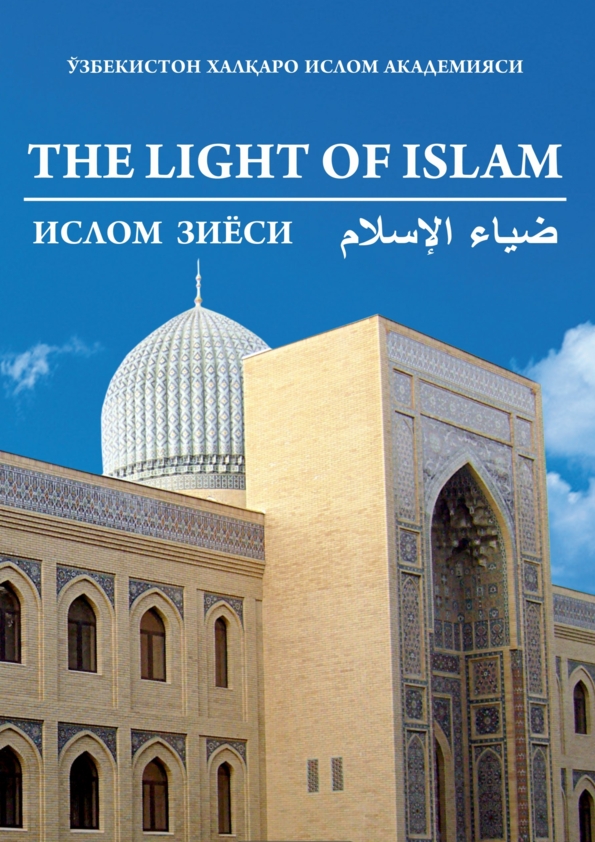

ARTICLE ANNOTATION

AUTHORS

A.Yakupov
"O`ZBEKISTON XALQARO ISLOM AKADEMIYASI" DAVLAT MUASSASASI
Tags
SIMILAR ARTICLES
- Teaching thrift to preschool children
Bulletin of Navoi State University · 2 Sentabr 2026
- Determination of the Circulation Zone Width at the Junction of Earthen Canals
International Scientific Journal Science and Innovation · 31 Avgust 2026
- Deformation-decoupled connections between a pultruded GFRP frame and three-layer 3D-printed walls
International Scientific Journal Science and Innovation · 31 Avgust 2026
- Development of an Optimized Performance-Graded (PG) Asphalt Binder for Uzbekistan's Road-Climatic Conditions and Traffic Loads: Rheological Characterization and Hybrid Polymer Modification
International Scientific Journal Science and Innovation · 31 Avgust 2026
- Remote Sensing and GIS Monitoring of Wind Erosion and Dust Emission in Central Asia
International Scientific Journal Science and Innovation · 31 Avgust 2026
- Morphological parameters in the upstream reach of a flow constricted by a spur dike
International Scientific Journal Science and Innovation · 31 Avgust 2026
OTHER ARTICLES IN THIS JOURNAL
- Books dedicated to Hadith narrators
THE LIGHT OF ISLAM · 11 Iyun 2026
- Ibn Sina's exotericism in metaphysics and the interpretation of the world
THE LIGHT OF ISLAM · 8 May 2026
- The formation and development of scholarly traditions of Islamic law in Mawarannahr
THE LIGHT OF ISLAM · 8 May 2026
- The legal status of khabar al-wahid in schools of Islamic jurisprudence
THE LIGHT OF ISLAM · 8 May 2026
- Characteristics of social integration of Muslim communities in religious minority conditions
THE LIGHT OF ISLAM · 8 May 2026
- Abu’l-Ma’ali Muhammad ibn Ubaydullah’s “Bayan al-Adyan”: A Source Analysis in Eastern Comparative Religion
THE LIGHT OF ISLAM · 8 May 2026
Rate Article
Article Identifiers
DOI:
Not Available
References
Herodotus. (2003). The Histories (R. Waterfield, Trans.). Oxford: Oxford University Press. (Original work published ca. 430 BCE).
Nematullo Mukhamedov, Nurulloh Turambetov (2022). The History and the Epigraphy of the Memorial Complex of Sultan Uvays-Baba. International Journal of Multicultural and Multireligious Understanding. Hamburg, Germany. Volume 9, Issue 12 December, 2022 Pages: 606-615. http://dx.doi.org/10.18415/ijmmu.v9i12.4402
Strabon. (1994). Geografiya (G. A. Stratanovskiy, Trans.; O. O. Kryuger, Ed.; S. L. Utchenko, General Ed.). Moscow: Ladomir.
Strabon. (2006). Geography (H. L. Jones, Trans.). Cambridge, MA: Harvard University Press. (Original work published ca. 20 CE)
Tolstov, S. P. (1961). Orolbo‘yi skiflari va Xorazm. Socialist Encyclopedia (SE).
Tolstov, S. P. (1961). Sirdaryo deltasidagi skif qavmlari. In S. P. Tolstov, Orolbo‘yi skiflari va Xorazm. Socialist Encyclopedia (SE).
Yagodin, V. (1978). Pamyatniki kochevykh plemen drevnosti i srednevekov’ya. In Drevnyaya i srednevekovaya kultura yugo-vostochnogo Ustyurta. Tashkent: [Publisher not specified].
Yagodin, V. (1992). Strelovidnye planirovki Ustyurta. Arkheologiya Priaralya, (Issue V). Tashkent: [Publisher not specified].